GUIDE · KNITWEAR
Photographing jumpers and knitwear.
Knitwear doesn't forgive bad light. Or hidden pilling.
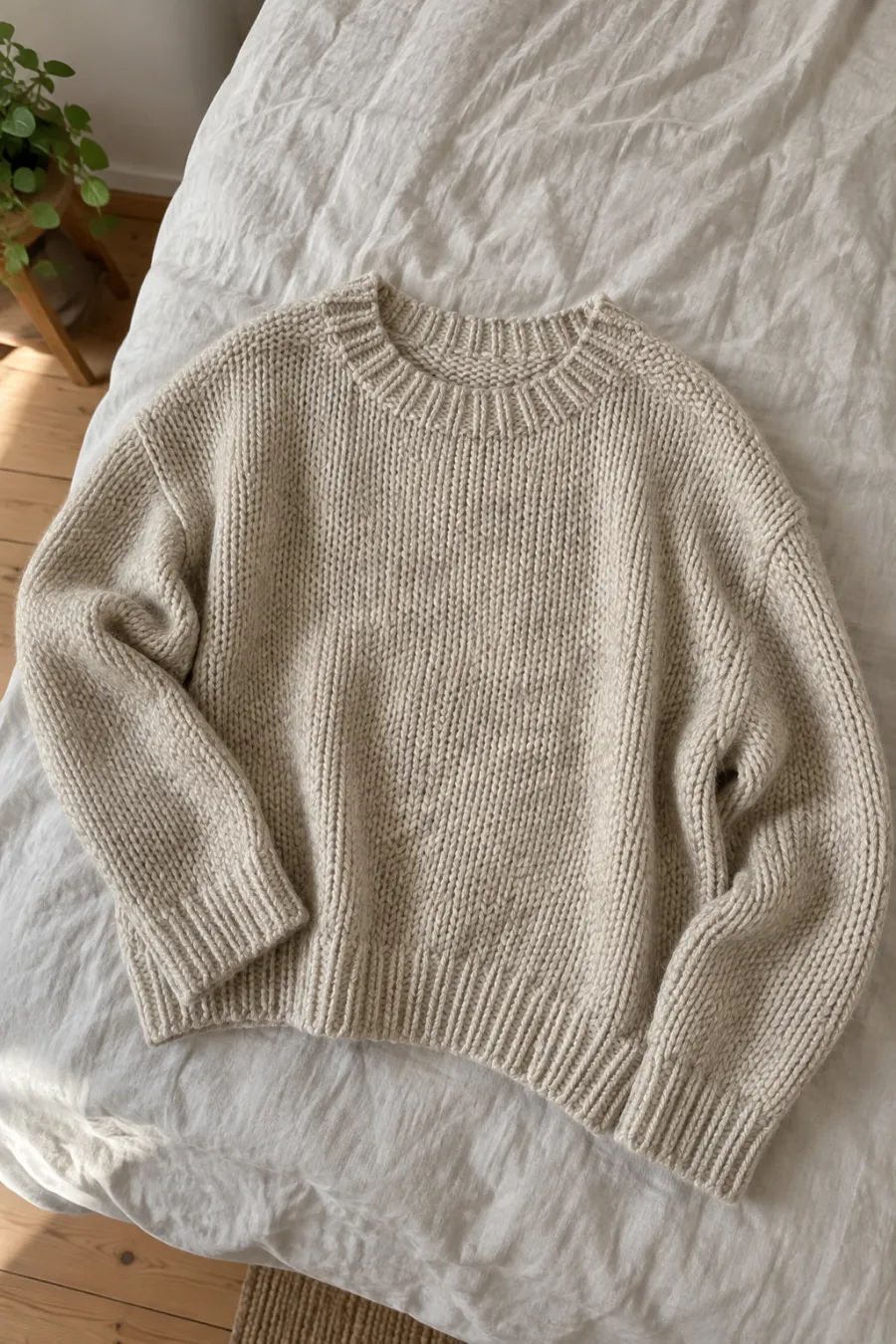 AI-generated
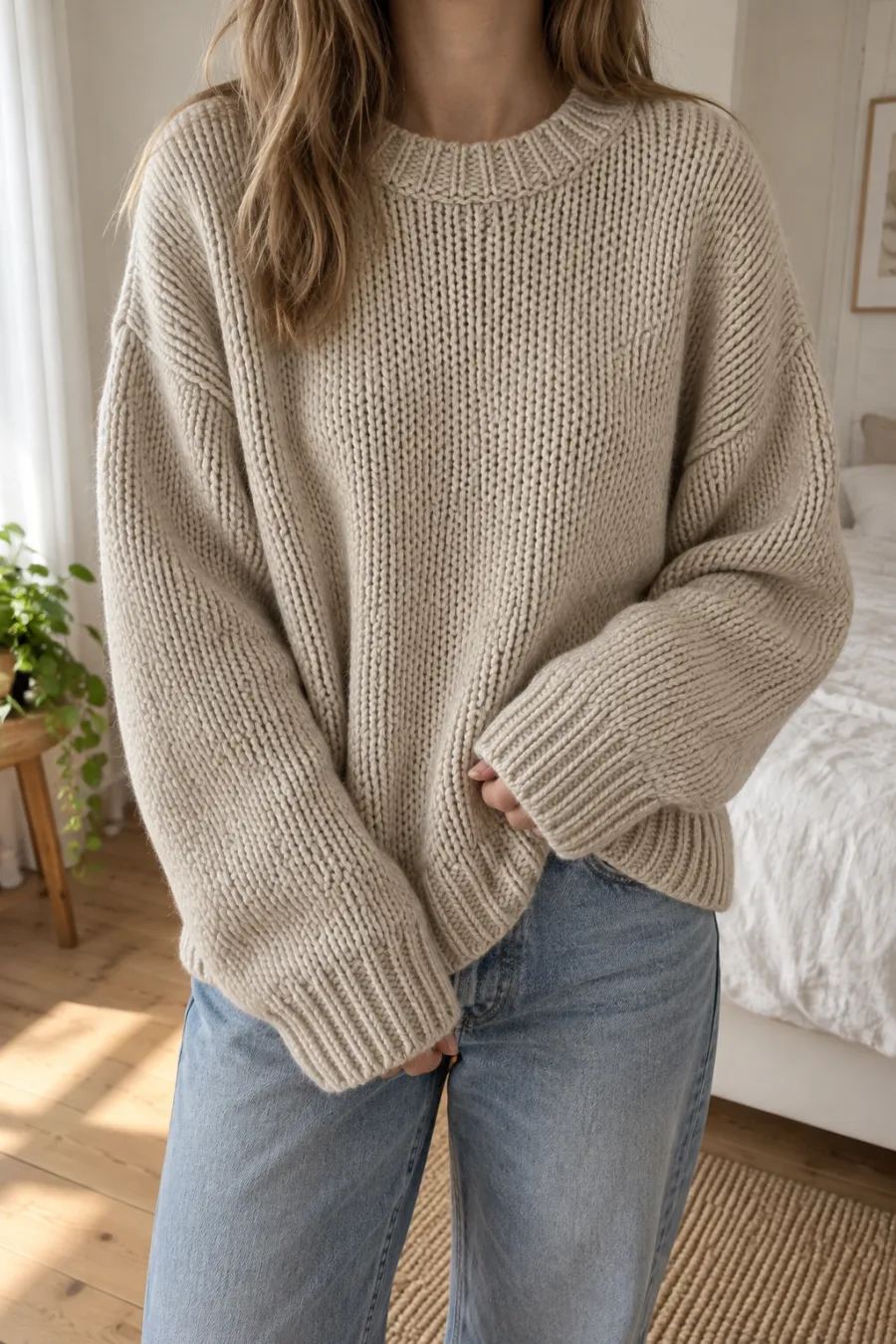 AI try-on image
In short
Show knitwear in daylight from the side, so the texture becomes visible. Photograph the label with the material, show pilling honestly and lay heavy jumpers flat instead of hanging them. On a hanger, knitwear stretches out of shape. Flat or worn, it looks the way it is.
The 6 rules for knitwear
Scroll, don't read
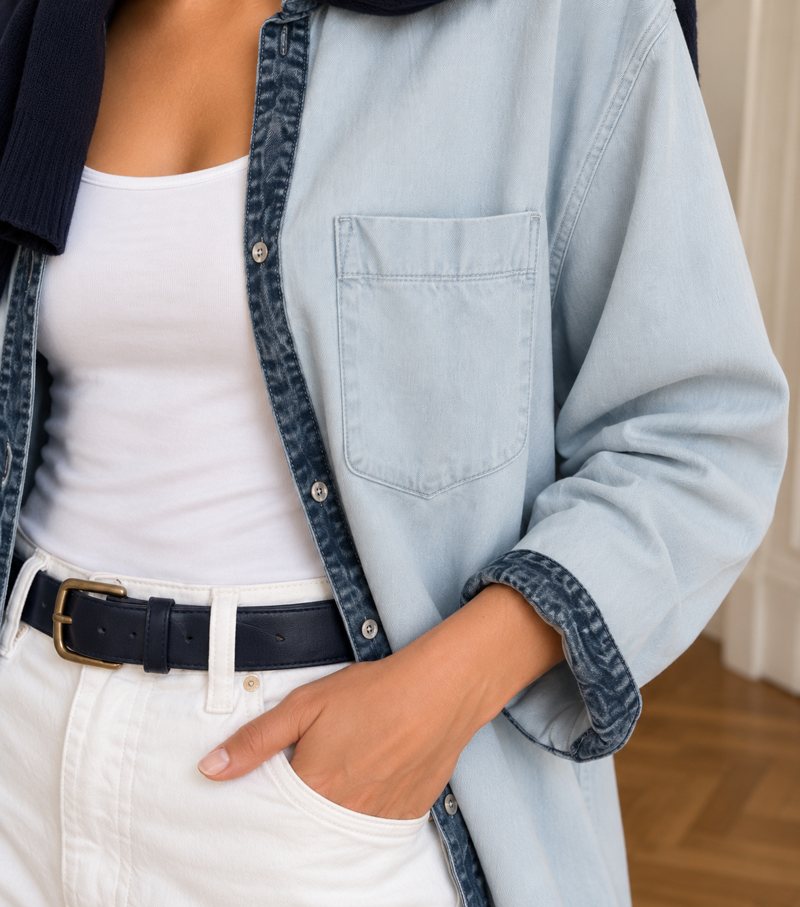 AI try-on image
Light from the side.
Side light brings out the texture.
- AI-generated
Don't hang it.
Heavy knitwear stretches. Show it flat or worn.
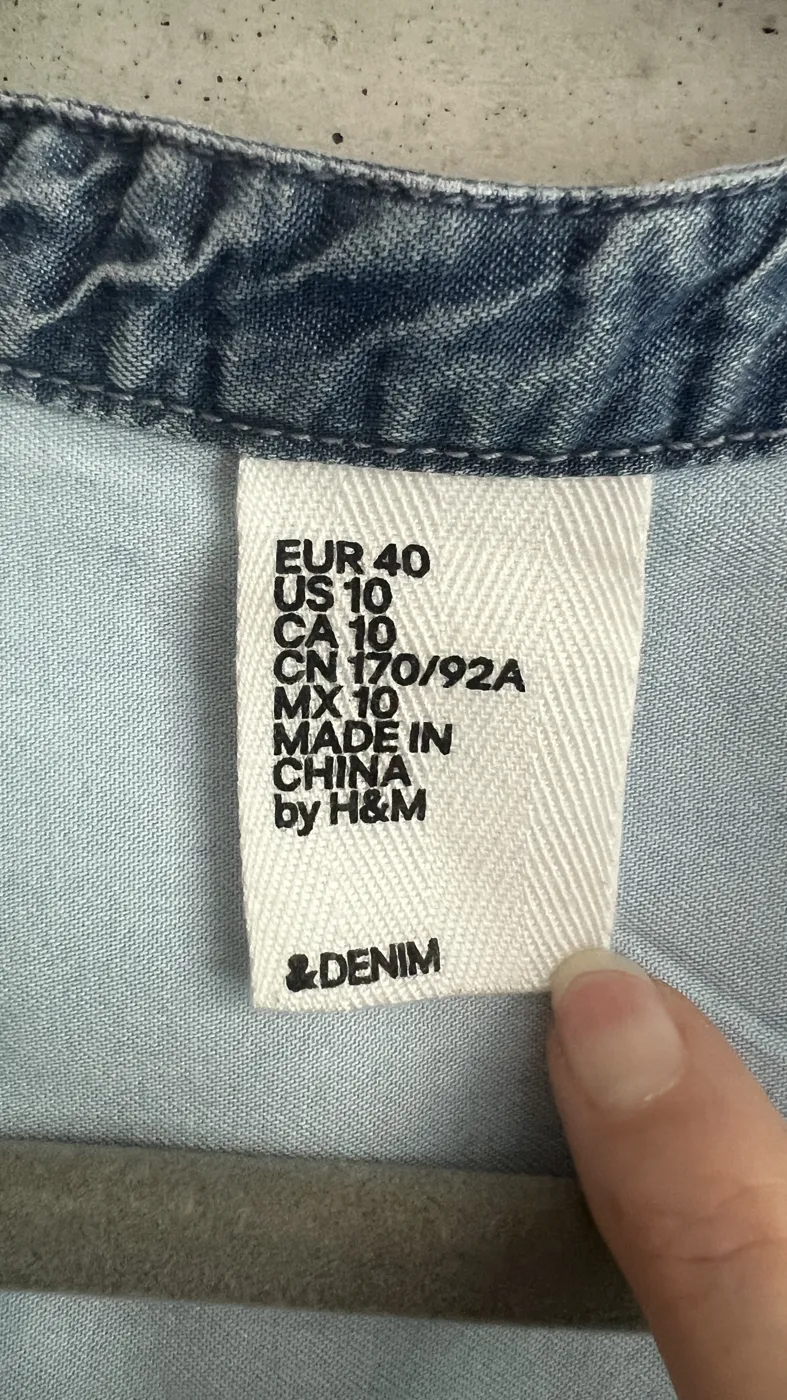
Show the material.
Wool, cashmere, cotton: the label helps it sell.
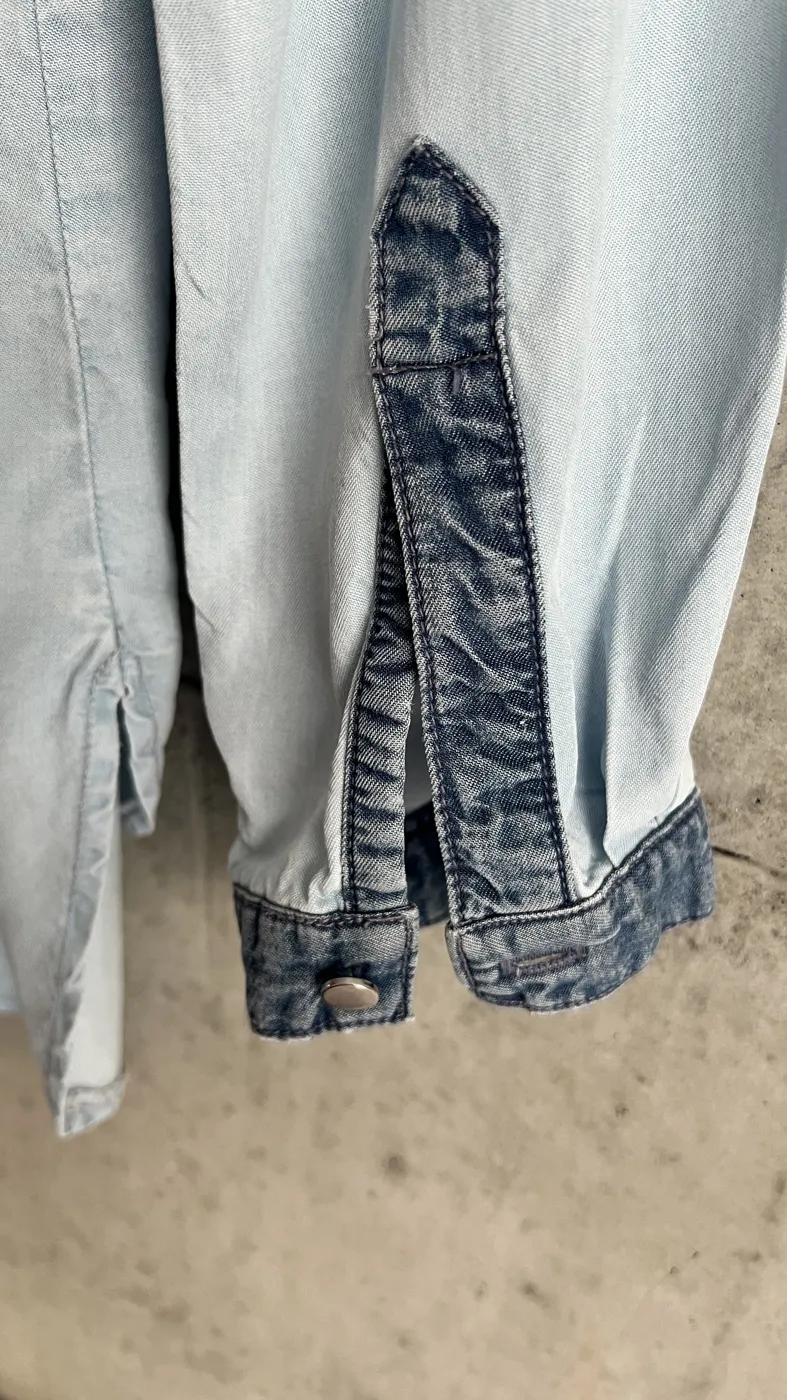
Pilling, honestly.
A fabric shaver helps; whatever remains goes in the photo.
- AI try-on image
Show it worn.
On a dress form or as an AI try-on image: you can see whether it's oversized or close-fitting.
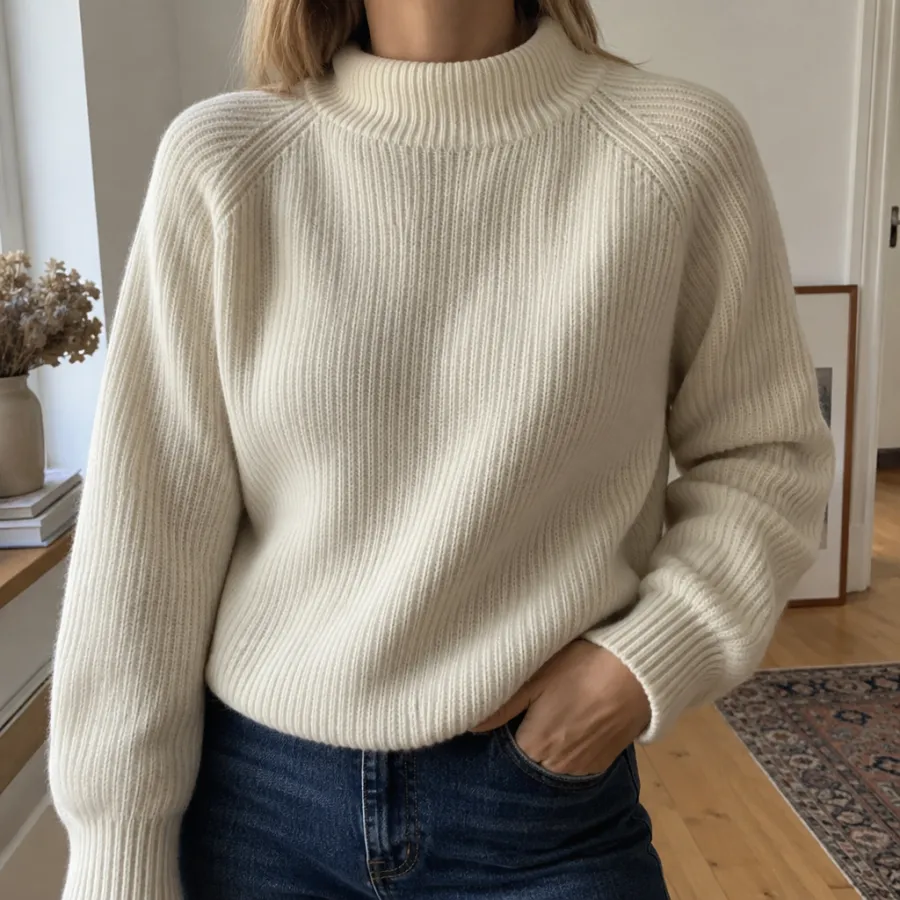 AI-generated
Cuffs and collar.
Stretched cuffs often only show up close. Show them, and there are no surprises.
Frequently asked questions
How do I remove pilling before selling?
With a fabric shaver, carefully and flat. Whatever remains goes in the listing.
Can AI remove pilling?
No. Pilling is part of the condition and stays visible in the image. Vinted told the German magazine Öko-Test that the item must be represented accurately.
How do I show cashmere?
Photograph the label with the material and the surface up close in side light.
Flat or worn?
Both: worn (dress form or AI try-on image) for the cover photo, flat for measurements and details.