GUIDE · RULES
AI try-on images on Vinted, Depop and eBay: what applies where?
Where the platforms' rules are, what has been said publicly and what the law says about misleading listings.
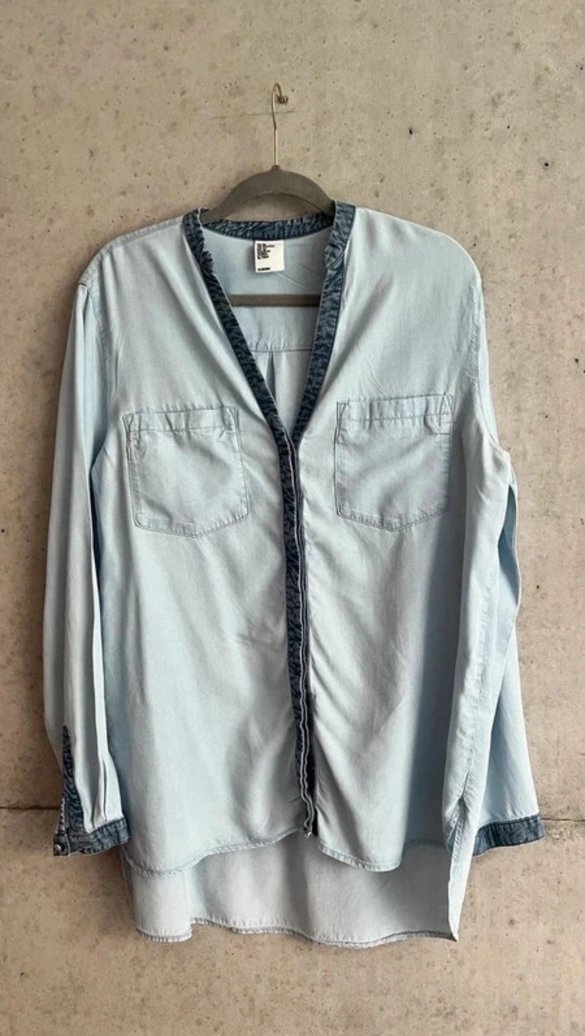
 AI try-on image
In short
The rule pages of Vinted and eBay don't mention AI, and Depop's terms mention it only for Depop's own listing tools (opened on 24 and 25.10.2026). Vinted told the German magazine Öko-Test that AI is not banned per se, as long as the item is represented accurately. The legal line is misleading the buyer, not the AI itself. Our recommendation: label it, and add your real photos.
- Rules don't ban AI
- Misleading is off-limits
- Real photos as well
What do the platforms say about AI images?
| Platform | Rule page | Public statement on AI | Our recommendation |
|---|---|---|---|
| Vinted | Catalogue Rules, don't mention AI | AI not banned per se, the item must be represented accurately (Vinted to Öko-Test and NOS, August 2026) | AI image first, real photos right behind it, labelled |
| Depop | Terms of Service, mention AI only for Depop's own listing tools | None found | AI image first, real photos right behind it, labelled |
| eBay | Picture policy, doesn't mention AI | None found | AI image first, real photos right behind it, labelled |
As of 25 October 2026; the pages were opened on 24 and 25 October 2026. Rules change, so read the current version on the platform.
What does the law say about misleading photos?
For a private sale in England, Citizens Advice explains that goods must match their description (Sale of Goods Act 1979); a buyer who gets something else can ask the seller for the difference in value. Our recommendation: treat every image like part of the description. It must show the item as it is.
Speaking to Öko-Test about German law, lawyer Jens K. Fusbahn names two more things that are off-limits: other people's images, even if AI has changed them (manufacturer photos, shop images, influencer photos), and distorted logos or patterns, which can infringe trademark and design rights.
Does the EU AI Act apply to me as a private seller?
The AI Act is EU law, and the UK is not an EU member. Article 50 of the AI Act has applied since 2 August 2026: providers of AI systems must mark generated images in a machine-readable way, and deployers must disclose deepfakes. Under the definition in Article 3, someone who uses an AI system in the course of a personal, non-professional activity is not a deployer. According to Öko-Test, the labelling duty is aimed at businesses, and the regulation does not name private sellers. Voluntary labelling still makes sense.
Frequently asked questions
Can Vinted suspend my account if I use AI images?
Vinted told Öko-Test that it removes listings or suspends accounts when AI is used to mislead. When else an account can be restricted is set out in the Catalogue Rules.
Can I edit a manufacturer's photo with AI?
No. Other people's images stay other people's images, even when changed. Always start from your own photo.
Are the rules different if I sell as a business?
Yes. According to Öko-Test, the EU AI Act's labelling duty applies to businesses. What Vinted says about selling as a business is on its help page Commercial selling.
Where do I find the current rules?
In Vinted's Catalogue Rules, Depop's Terms of Service and eBay's picture policy. We link them in the table and below.
Sources
- Öko-Test (German-language): KI-Bilder auf Vinted & Co.: Sind KI-Tragebilder erlaubt? (13.08.2026, with a statement from Vinted and lawyer Jens K. Fusbahn)
- NOS (Dutch-language): AI-foto's vinden hun weg op platforms zoals Vinted (08.08.2026)
- Vinted Catalogue Rules
- Depop Help Centre: Terms of Service
- eBay UK: Picture policy
- Vinted Help Centre: Commercial selling
- Citizens Advice (England): Letter to complain about misdescribed goods bought from a private seller
- kiki FAQ: AI photos and platform rules
- EU AI Act, Article 50, full text (artificialintelligenceact.eu)
- Regulation (EU) 2024/1689 (AI Act), Official Journal on EUR-Lex